


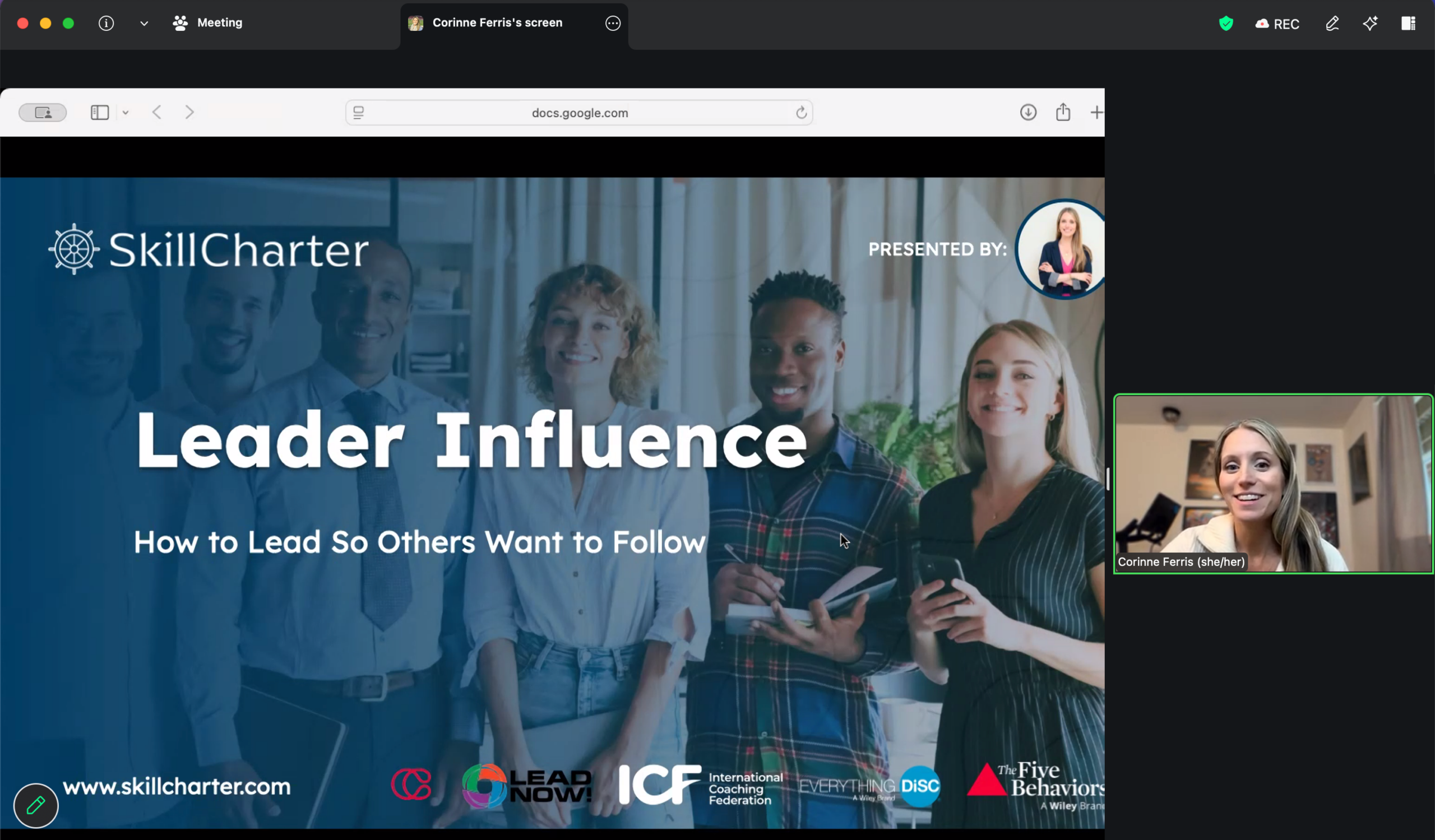
Key Takeaways from our April 2026 Webinar
What brings leaders to a conversation about influence? We asked that exact question at our April 2026 webinar and two themes came up again and again: change, and the desire to bring people along through it.
Most leaders already know where the team needs to go. The hard part is getting people to actually come along.
The three zones leaders operate in every day
Before getting into tactics, Corinne grounded everything in a clearer picture of where leadership energy actually goes.
Every leader operates across three zones:
- Control (your own actions, words, and behavior)
- Influence (how others think, feel, and act around you)
- No control (external events and other people’s decisions)
The goal of influence isn’t to own the result. It’s to create something bigger than what you could have built alone.
The 3 core levers of leadership influence
Credibility
The question your team is quietly asking: “Why should I trust you?”
Credibility isn’t a title. It builds across three things:
- Knowing what you’re talking about
- Delivering consistently on what you say you will, and
- Admitting when you don’t know something.
That last one surprises people. Admitting uncertainty sounds like it should work against you, but it doesn’t. When you say “I don’t know” in the moments where you genuinely don’t, people believe you more when you say “I’m confident about this.” Not overstating things ends up doing more work than the words themselves.
How it shows up depending on who you’re leading:
- If you’re leading up, it sounds like “I won’t surprise you.” Your manager shouldn’t hear about a problem from someone else first.
- With peers, it’s about reading the room and knowing when to share your expertise and when to step back.
- If you’re leading down, it sounds like “I won’t abandon you.” Stick with the people you’re responsible for, especially when things get hard.
Connection
The question your team is quietly asking: “Do I feel understood?”
This is the one Corinne said leaders forget most often, especially during change.
When a team is going through something new, the instinct is to explain. Present the plan. Give people the information they need and move on. But people who feel heard first are far more likely to get on board than people who were simply told.
Corinne described it as the “bread” problem. Leaders spend weeks baking a full loaf and then present it to people who are still looking at ingredients. The disconnect isn’t the plan itself. It’s the gap between how long you’ve been processing the change versus where your team is in processing it.
What connection looks like in practice:
- Leading up – make the job easier for the person above you. Low friction is how you influence your manager
- With peers – show up consistently with the same care regardless of what you need from them that day
- Leading down – make the work meaningful. People stay engaged when what they’re doing matters beyond the task itself
Consider the example of the Artemis 2 crew: the group of astronauts that most recently made history in space. One crew member wanted to name a newly discovered crater after his wife, who had passed away during their mission preparation. A fellow crew member did it for him because he was too emotional to ask. That’s what deep connection looks like in practice. Knowing what someone needs before they say it.
Framing
The question your team is quietly asking is “How is this idea being presented?”
Framing is how you give people a reason to care. It’s not a spin. It’s context.
Leaders who are good at it tend to do a few things consistently. They build a vision people want to be part of rather than a set of instructions to follow. They give before they ask, meaning they show people what’s happening behind the scenes before asking for commitment. They reference what’s worked before because social proof matters even inside organizations. And they create focus and urgency so people know this one actually matters.
How framing shifts depending on who you’re talking to:
- Leading up: talk about org-level impact, risk, and your recommendation. Executives aren’t making small decisions, so meet them at the level they operate.
- With peers: lead with impact. What changes if this works?
- Leading down: connect to purpose and be honest about tradeoffs. People can handle the real picture when you give it to them straight.
Three things you can try this week
You don’t need to overhaul your leadership style to start here. These are low-stakes and easy to test:
- Assess your influence map. Where are you influential right now, and where aren’t you? Be specific. Up, down, and with peers are three different answers.
- Flip one message from what to why. In your next meeting, start with why it matters instead of what needs to happen. Then ask a follow-up question. “What concerns do you have?” or “What am I missing?” will get you more than a status update.
Find one thing you can remove for someone. Ask “What can I take off your plate?” Try it once this week.
Check out our Key Takeaways Doc on LinkedIn
We’ve published the main key takeaways of the webinar into a PDF on LinkedIn that you can download and carry with you anywhere and even share with your team!