


Key Takeaways from our May 2026 Webinar
Every month, SkillCharter hosts a free webinar for leaders. In May, SkillCharter co-founder Kate Cockrill covered why talented teams still fall apart and what it takes to fix the patterns underneath. Here’s the full breakdown.
The Big Idea
When teams fall apart, the problem is almost never talent. It’s behavior. A team can be full of strong people who each know their job and still fail to win together. That kind of breakdown shows up in behaviors first, then hardens into patterns. Once it’s a pattern, it gets much harder to fix.
Patrick Lencioni’s book, The Five Dysfunctions of a Team, maps out five dysfunctions that can create problems for most teams.
The Five Dysfunctions
- Absence of trust. People can’t be honest about what they don’t know or where they need help.
- Fear of conflict. Without trust, real disagreement gets buried or turns personal.
- Lack of commitment. Without honest conflict, people nod in the room and move in different directions afterward.
- Avoidance of accountability. Without commitment, no one can hold anyone accountable, because no one fully agreed.
- Inattention to results. Without accountability, people chase their own wins instead of the team’s.
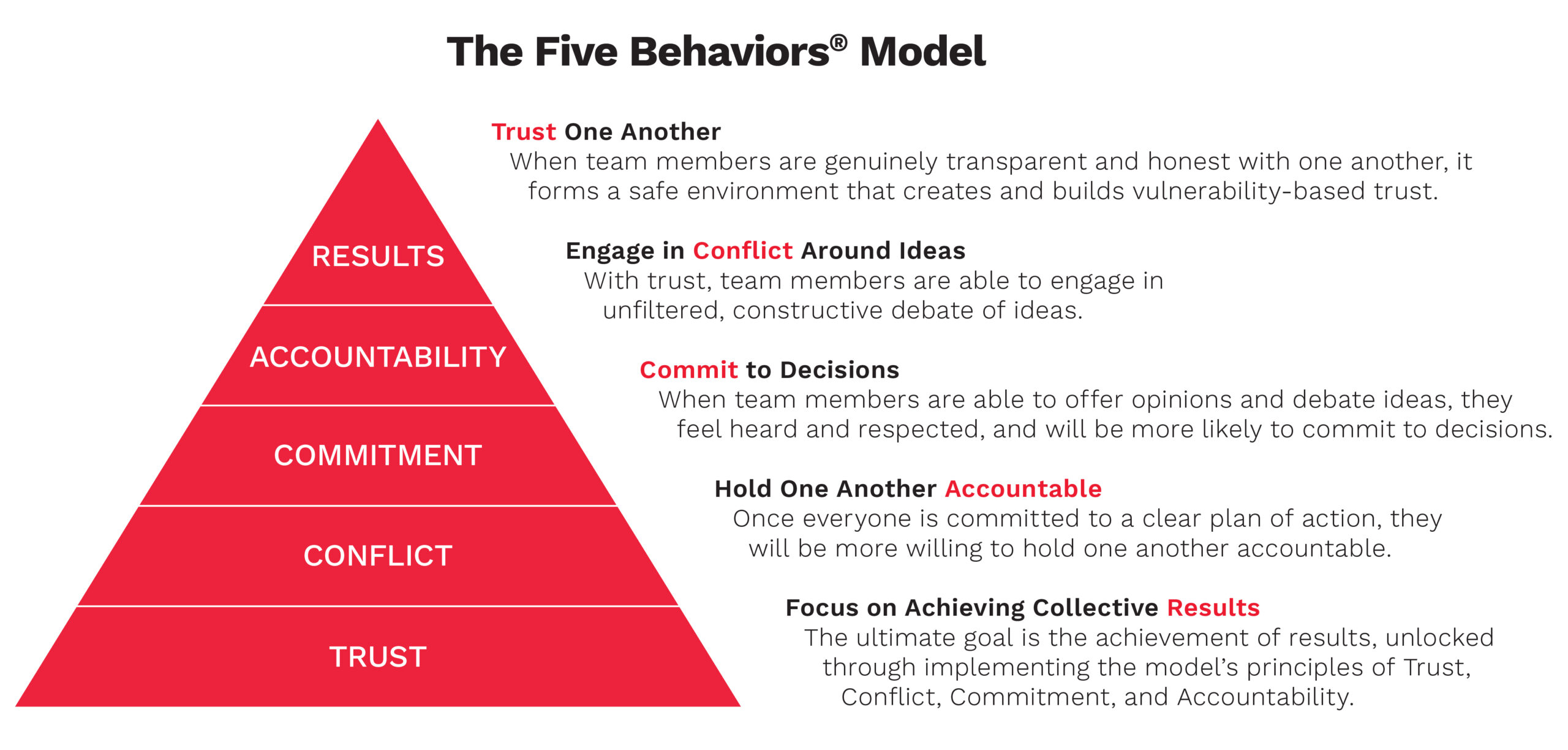
Flip those dysfunctions, and you get The Five Behaviors® that make a team work.
Start with Trust
When people think of trust, they often think of two different kinds:
Earned trust. You prove yourself over time and people start to trust you.
Blind trust. Trusting someone no matter what, even when the signs say you shouldn’t.
However, the Five Behaviors model emphasizes:
Vulnerability-based trust. This kind of starts immediately and requires maintenance. Teams know it’s present when people are willing to ask for help, admit mistakes, and hold each other accountable, without hesitation. It demands honesty, real-time feedback, and accountability.
How Managers Can Cultivate Vulnerability
Vulnerability can feel like a big ask for the team. Here are a few things managers can do to make it easier for the team:
- Start meetings with a question instead of your answer. If the manager says what they think first, everyone else just agrees. The question pulls real thinking into the room before your opinion shapes it.
- Wait five seconds after you ask a question. Some people need a moment to think. The fastest talker isn’t always the smartest one in the room, and silence is what gives the slower thinkers a chance to speak.
- Spend the first few minutes on something other than work. Ask about the weekend, their kid’s game, the trip they just took. Teams that know each other as people give each other tougher feedback later, because trust makes hard conversations feel safe instead of personal.
- Do a quick check-in at the start of each meeting. Ask everyone for one word on how they’re feeling. It surfaces the bad day or the frustration early, so the team can adjust instead of guessing why someone’s quiet or short.
How the Five Behaviors Build on Each Other
Trust makes honest conflict possible. When teammates trust each other, they can disagree out loud without it feeling like a personal attack. That kind of disagreement is what gets every concern on the table before a decision gets made.
Honest conflict is what makes real commitment possible. When every concern has been said and heard, people can buy in. Nobody walks out of the room secretly planning to do their own thing, because they already had the chance to push back.
Real commitment is what lets peers hold each other accountable. If the whole team agreed to the plan, any teammate can call out a slip without it feeling like they’re going around the manager. Accountability stops being the leader’s job alone.
And peer accountability is what makes results feel like team wins. When everyone is holding everyone else to the same standard, people stop chasing their own scorecards and start caring about whether the team hits the goal.
Want the Full Set of Behaviors?
The key takeaways from the May webinar are in a downloadable PDF on LinkedIn.