


Two people hear the same schedule change, but they react in opposite ways. One person is skeptical, the other is anxious to get people working together to solve outstanding issues.
Two questions tell you a person’s work style
Ask yourself two questions about the person in front of you.
- Do they react fast, or do they stop to think?
- Do they question a change, or do they accept it easily?
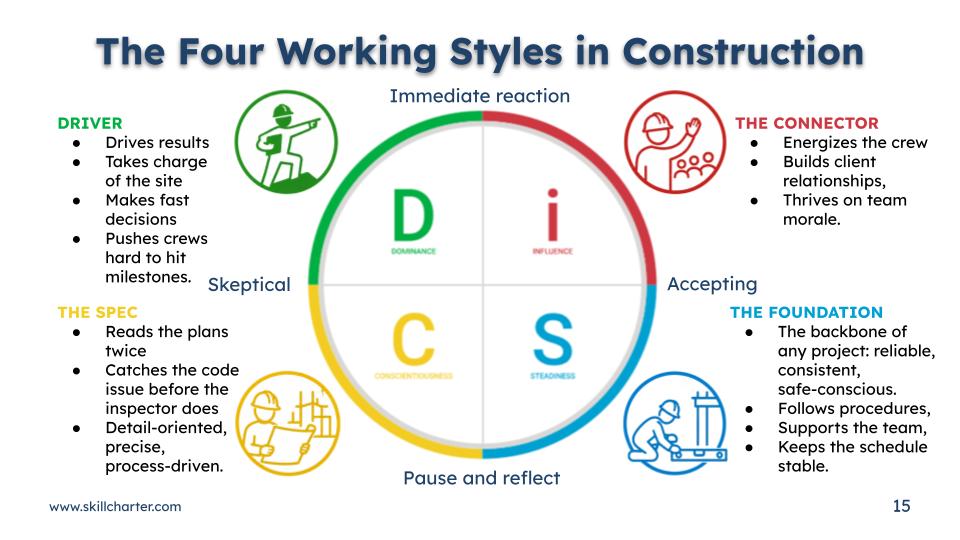
Your two answers place that person in one of the four Everything DiSC® work styles.
| Style | How they answer | What you see on your site |
|---|---|---|
| Driver D | Fast and questioning | Takes charge of the site, makes fast decisions, pushes the team to hit milestones |
| Connector i | Fast and accepting | Brings energy to the team, builds client relationships, keeps morale up |
| Foundation S | Reflective and accepting | Reliable, consistent, safety-conscious. Follows procedures and keeps the schedule stable |
| Spec C | Reflective and questioning | Reads the plans twice, catches the code issue before the inspector does |
You need all four styles on a project, but the conflict starts because two of them react in opposite ways to the same news.
Why your team avoids difficult conversations
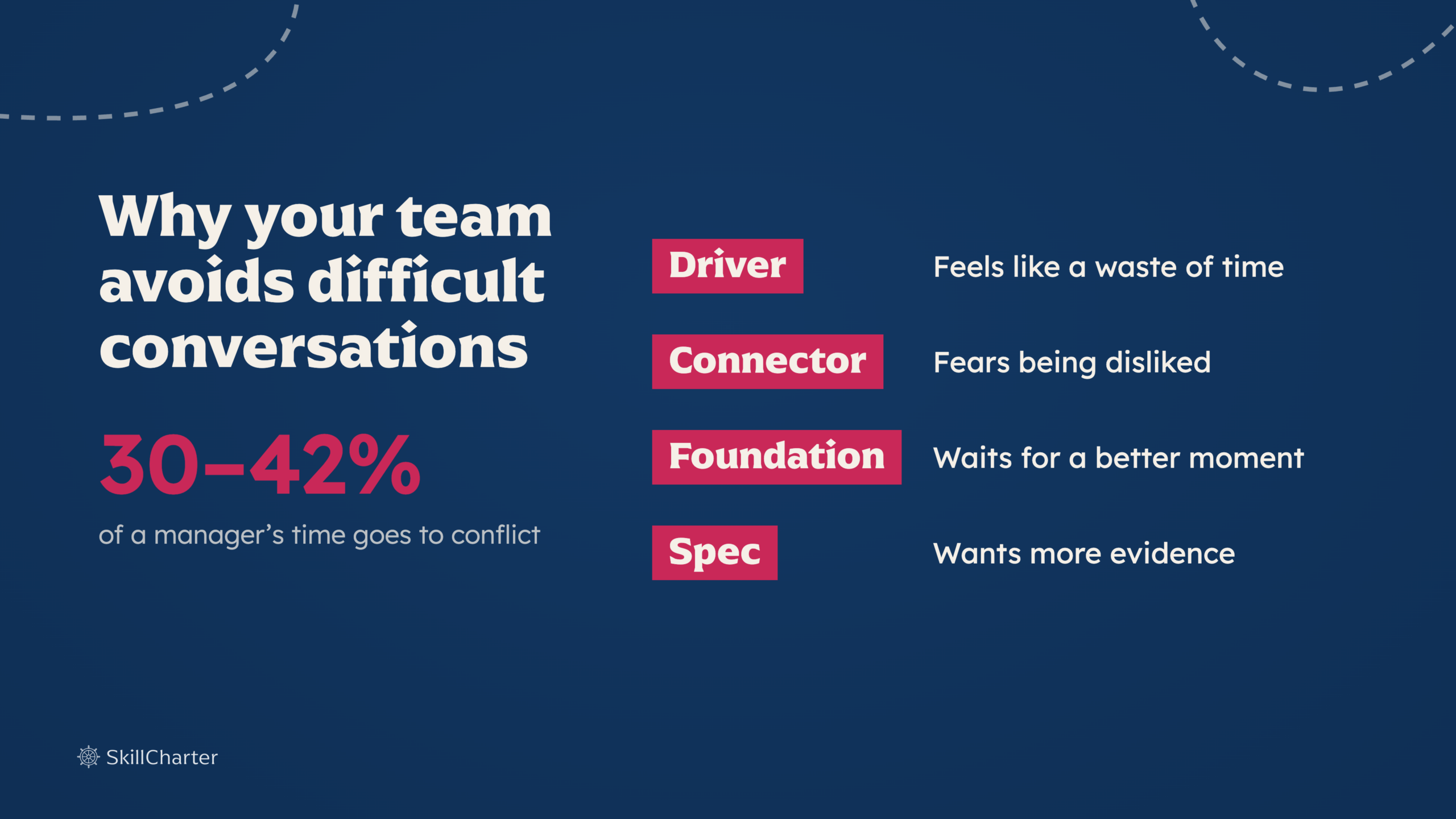
Managers spend 30 to 42% of their time dealing with conflict. When nobody raises the problem, the problem stays. More people have to join the discussion, so the problem becomes harder to solve and the decision costs more by the time you make it.
Each style avoids the conversation for its own reason.
- Driver avoids the conversation because emotional conflict feels like a waste of time, and because they expect to lose it
- Connector avoids it because they fear being disliked, so they may promise too much to delay the issue
- Foundation avoids it because they take on the tension to protect the team, so they wait for a better moment
- Spec avoids it because the evidence still feels incomplete, and stops taking part once the discussion becomes emotional
How to open the conversation with each style
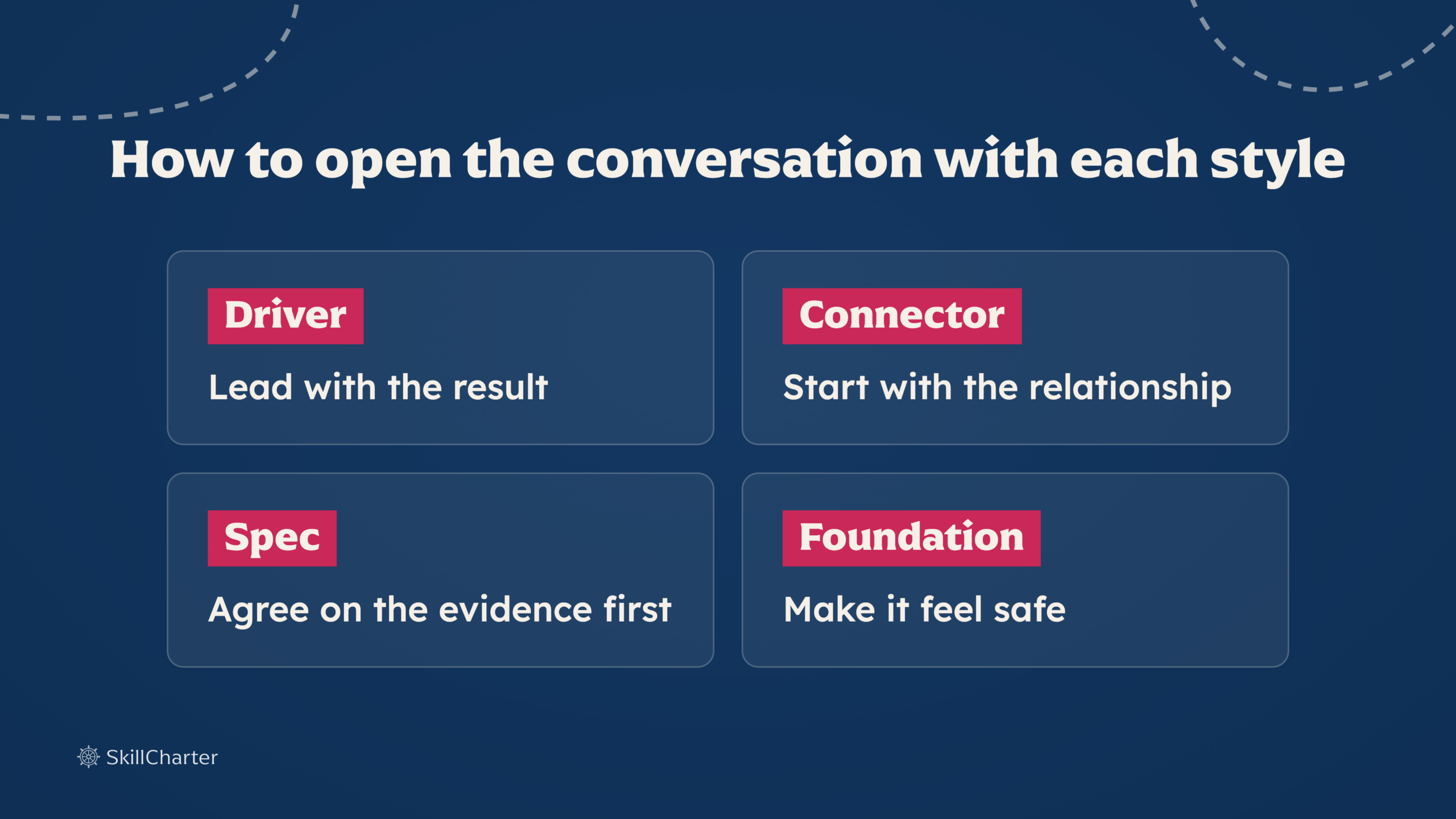
- Driver – Talk about the result you need. Give them control of the format and keep it short.
- Connector – Start with the relationship. Show them how the conversation protects it.
- Spec – Agree on what counts as evidence before you start. Stay factual, and take their analysis seriously.
- Foundation – Make the conversation feel safe. Ask direct questions, so that they know they can raise the issue.
Three ways to prevent jobsite conflict
- Learn the work styles of the people around you.
- Review your current issues and find the cause behind the behavior you can see.
- Align on agreements and behaviors across the whole site organization. The article on getting construction teams aligned at kickoff covers how to write those agreements, and the article on building trust on your construction project covers how to measure whether they are working.
Get the full key takeaways
Download the key takeaways on LinkedIn.
Want help with your own site? Book a free site culture assessment. You’ll find the problems and get action steps you can use right away.